
Estate Planning Guidance For Couples
Because love, commitment, and shared lives don't all look the same!
We Help couples Find clarity, protection, and peace of mind around their estate plan

Whether you're married, blending families, or building a life together without a marriage license, the questions are often the same:
What happens if something happens to one of us?
Who has legal authority to make decisions?
How do we protect each other — and our children?
How do we avoid confusion, conflict, or court involvement?
Our role is to guide you through those answers in a thoughtful, organized, and human way.
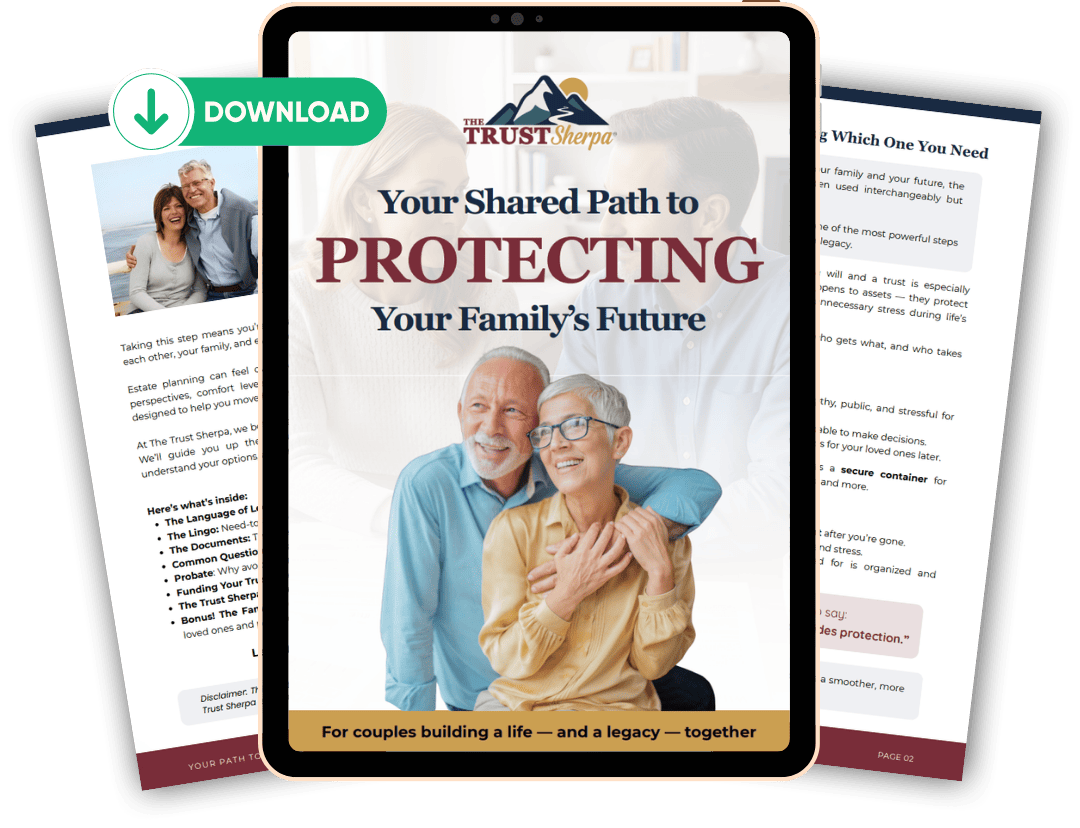
For Couples To Start With Clarity.
Your Roadmap To Your Family's Protection
This isn’t just another download — it’s your roadmap to protecting everything you’ve worked for and everyone you love. Inside your Free Couples Trust Starter Kit, you’ll find simple, step-by-step guidance that makes estate planning for clear, personal and stress-free.
What You Will Learn...
Direction vs. Protection — Which One You Need
Key terms (lingo made simple)
5 essential estate planning documents
Frequently Asked Questions
What is probate (and why to avoid it)
Frequently Asked Questions
The Trust Sherpa Way
Bonus: The Family Flow Chart
Couples We Commonly Work With
First Marriages
We help couples align beneficiary designations, establish roles, protect each other, and build a foundation that grows with them. We help first-marriage couples:
Coordinate beneficiary designations and asset ownership.
Establish clear roles (trustee, successor trustee, financial and healthcare agents).
Ensure each spouse is protected if the unexpected happens.
Put foundational documents in place that grow with your life.
This is about alignment. Financially, legally, & practically.
Blended Families & Second Marriages
Blended families bring more love (and more complexity). When children, prior marriages, or separate assets are involved, assumptions can create real problems. We help these couples:
Protect a surviving spouse without unintentionally disinheriting children.
Clearly define how assets pass — and when.
Reduce the risk of family conflict or court involvement.
Create a plan that respects past and present commitments.
This is where clarity matters most — and where guidance makes a real difference.
Unmarried Couples
Without planning, there are no automatic protections. We help ensure intentions are honored legally.
Commitment doesn't require a marriage certificate — but the law often does. For unmarried couples, there are no automatic legal protections. Without proper planning:
Your partner may have no authority in medical emergencies.
Assets may pass to biological family instead of your partner.
Courts — not you — decide what happens.
We help unmarried couples put protections in place so intentions are honored, not questioned.
The protection matters. not gender, marital status, or labels.
Estate planning is about:
Who you trust
Who you want to protect
Who should speak for you when you can't
How your legacy is handled
Those needs are universal. Our guidance is inclusive, respectful, and focused on what actually works.
How the Trust Sherpa Works With Couples
When working with couples, we act as your guide and coordinator, helping you:

Understand what documents matter — and why
Make thoughtful decisions together
Stay organized and on track
Navigate the process without overwhelm
You don't need to come in with answers.
You just need to be willing to have the conversation.
Let's Talk About Your Path
No two couples are the same — and your plan shouldn't be either. I'm here to guide you every step of the way. If you're ready to:
Get clarity
Reduce uncertainty
Protect each other and your family
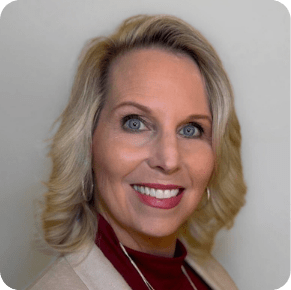
Kim Dannettell
The Trust Sherpa
FAQs Couples Ask
We're married — doesn't everything automatically go to my spouse?
Not always, and not in every situation. While spouses do have legal rights, those rights don't always align with your intentions, especially when:
• Children from prior relationships are involved.
• Assets are titled inconsistently.
• One spouse becomes incapacitated.
• There is no clear plan in writing.
Good planning replaces assumptions with clarity.
We're not married. Does that change things?
Yes. significantly. Unmarried couples do not have automatic legal authority or inheritance rights, even after decades together. Without proper documents:
• Your partner may have no say in medical decisions
• Assets may pass to biological family instead of your partner
• Courts may decide outcomes you never intended
Planning allows your relationship to be respected legally.
How do blended families protect everyone fairly?
With clear structure and intentional design. Blended families benefit from planning that:
• Protects a surviving spouse.
• Preserves inheritances for children.
• Sets expectations clearly and in writing.
• Reduces the likelihood of conflict or court involvement.
This is one of the most important — and sensitive — areas of estate planning.
Do we need to agree on everything before starting?
No. Many couples come to the process with different comfort levels, priorities, or knowledge. Our role is to:
• Educate both partners
• Facilitate productive conversations
• Help you reach decisions that feel aligned and thoughtful
You don't need perfection — just openness.
Can we do this if one partner owns more assets than the other?
Absolutely. Estate planning is not about equal — it's about intentional. Planning allows couples to:
• Respect premarital assets.
• Define what is shared vs. separate.
• Protect both partners appropriately.
• Avoid confusion later.
Will we still need an attorney?
That depends on the path you choose. Some couples work directly through guided systems, while others involve their own attorney. Our role is to:
• Guide the process
• Keep things organized and moving
• Help you understand your options
You're never forced into one approach.
What if we already have documents — but they're outdated?
That's very common. Life changes — marriages, divorces, moves, new property, family dynamics — can quietly make old documents ineffective or misaligned. A review often reveals:
• Gaps
• Conflicting designations
• Outdated assumptions
Updating brings peace of mind.
Is this just about death?
No — and that's a big misconception. Couples planning focuses just as much on:
• Incapacity
• Medical decision-making
• Financial continuity
• Reducing stress on the surviving partner
This is about protecting your life while you're living it.
What's the first step?
A conversation. We start by understanding:
• Your relationship structure
• Your concerns and priorities
• Your goals for each other and your family
From there, I help you identify the right path forward.
© 2025 The Trust Sherpa — All rights reserved.
Privacy Policy ︱ Terms of Use
Disclosure: The Trust Sherpa is not an attorney or CPA and does not provide legal or tax advice. All information shared is for educational purposes only, and designed to help you understand your options to make informed decisions about your estate plan. For legal or tax-related questions, please consult with a licensed estate planning attorney or qualified tax professional. Our role is to guide you through the process, help clarify your goals, and connect you with the right resources to complete and fund your trust.